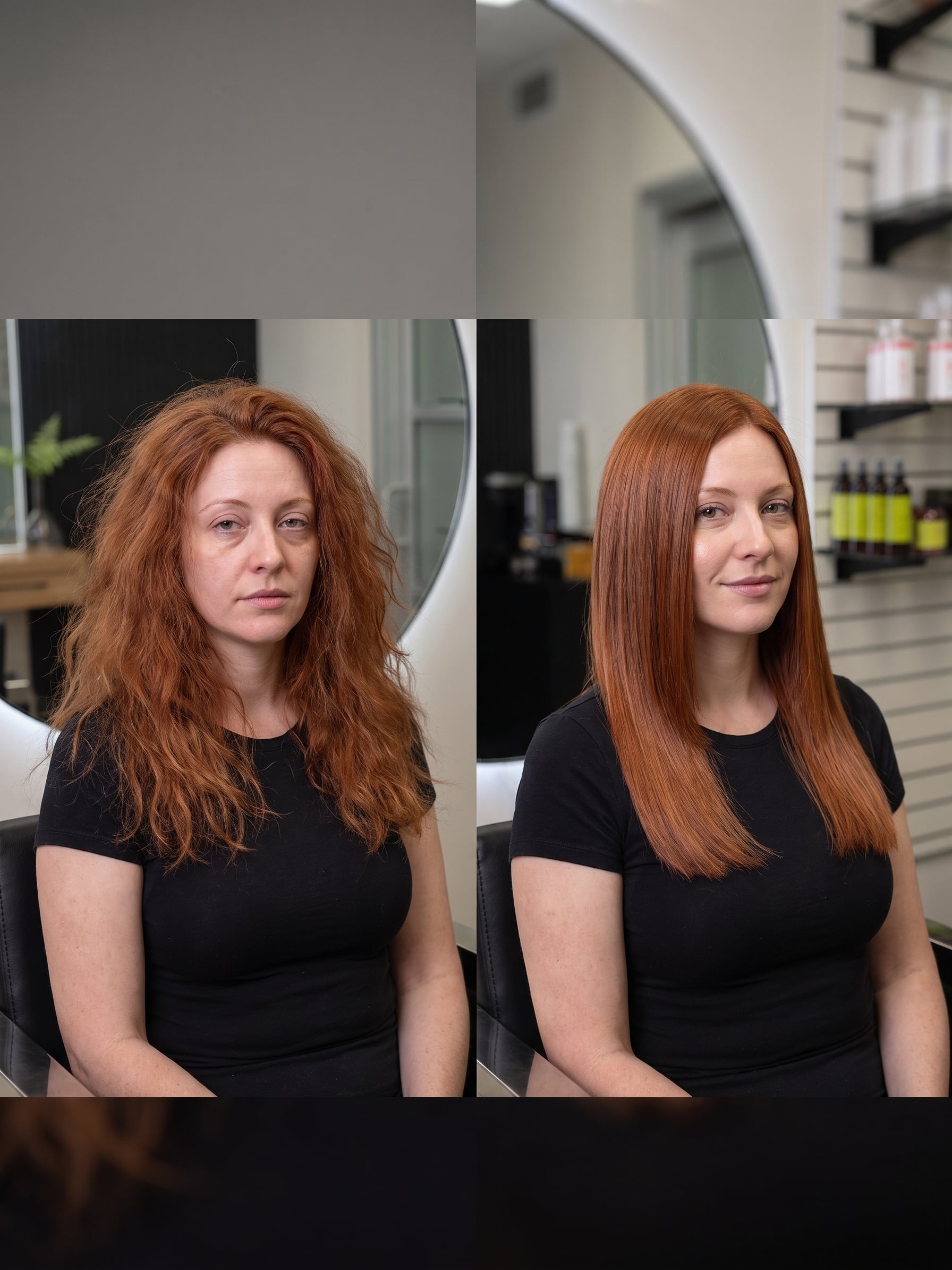
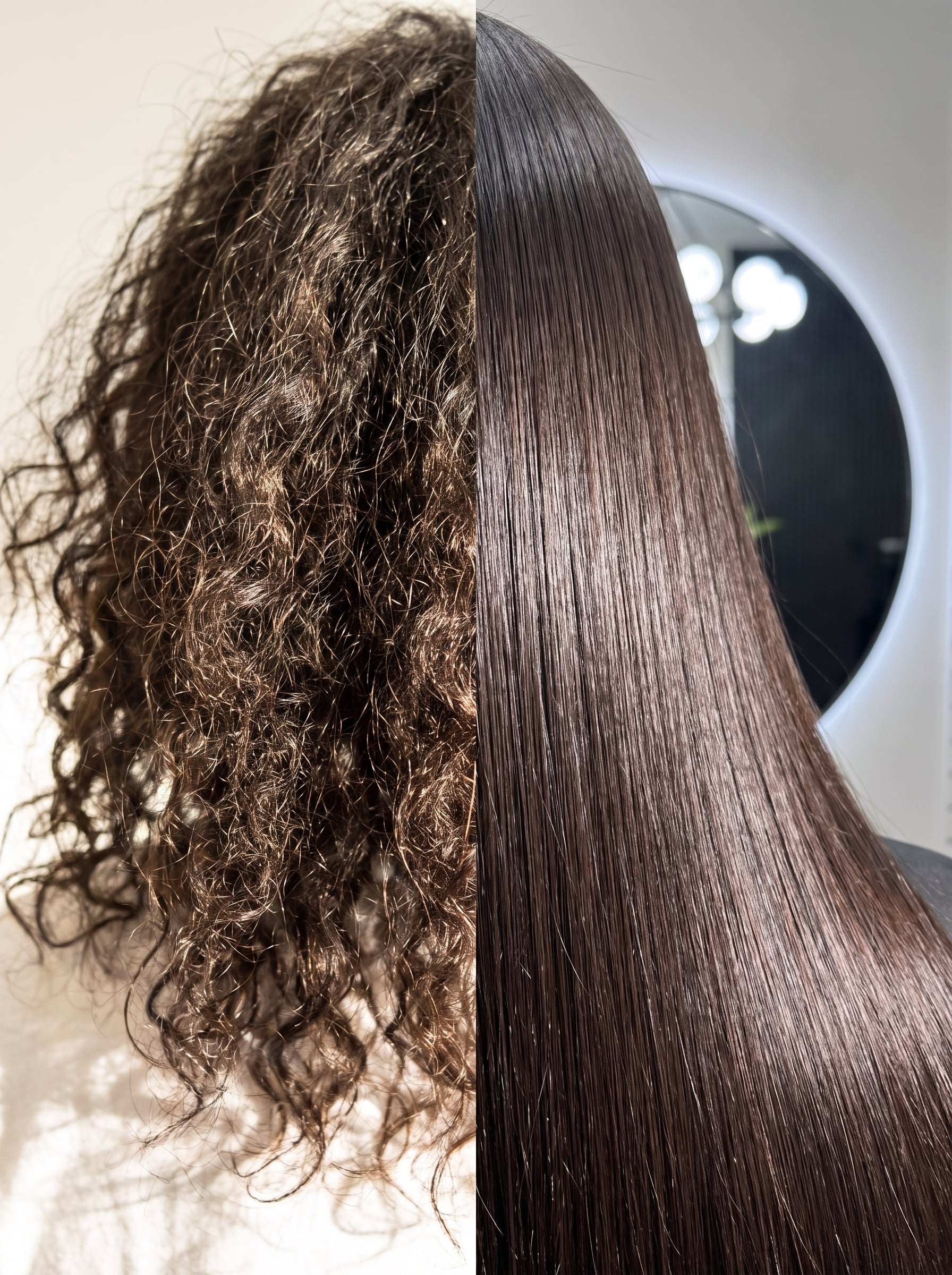
What Actually Happens to Your Hair During Japanese Straightening
By Belle · 2 min read
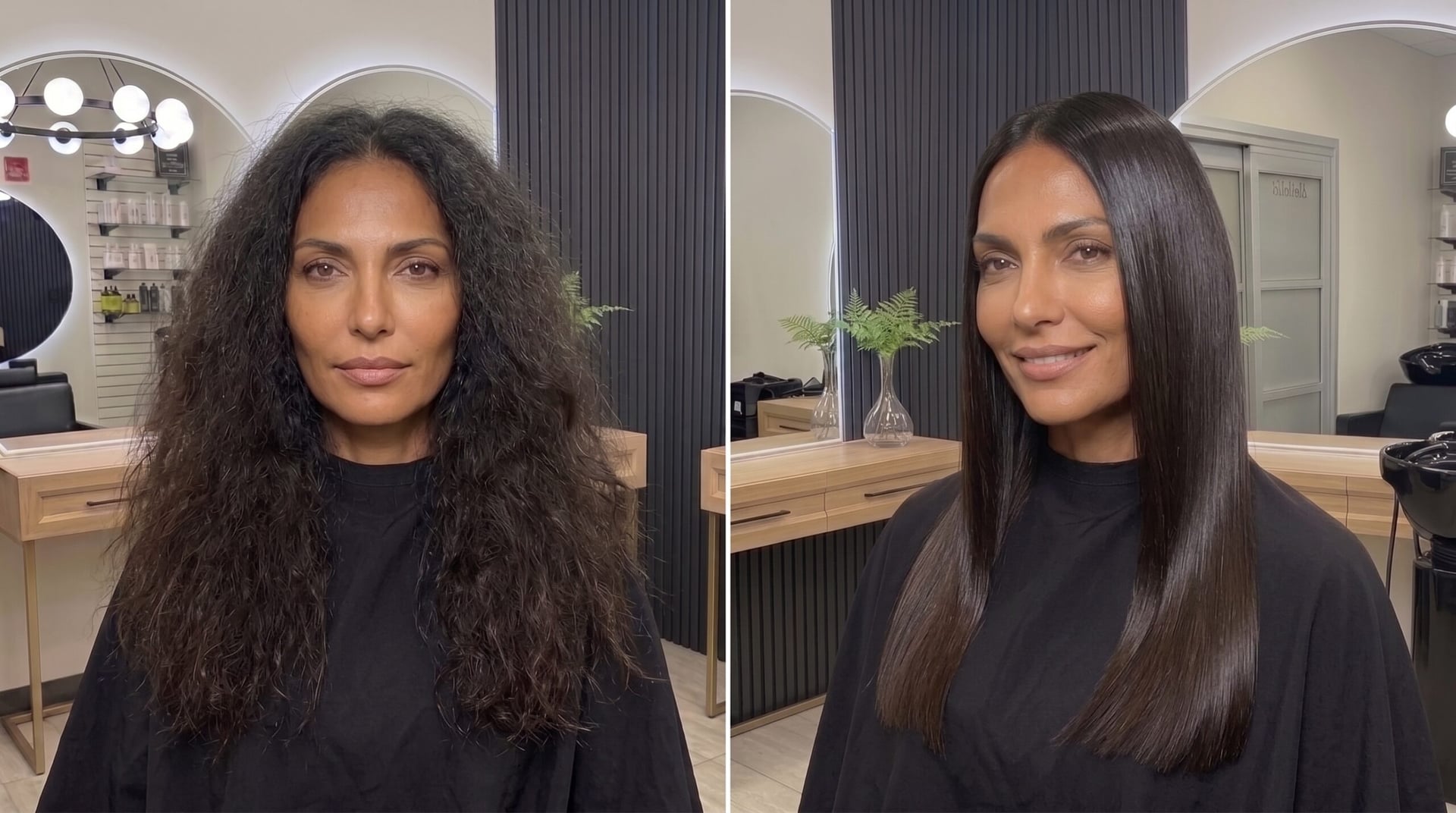
Japanese hair straightening (also called permanent straightening or iStraight System), a permanently alters the structure of the hair shaft. Understanding the chemistry helps explain why the results last and why the process takes so long.
The Science
Hair is made of keratin proteins held together by three types of bonds: hydrogen bonds (weakest, broken by water), salt bonds (broken by changes in pH), and disulfide bonds (strongest only broken by chemicals). Japanese straightening targets the disulfide bonds.
The process applies a softening solution that temporarily breaks those disulfide bonds. The hair is then flat-ironed at high heat, section by section, to physically realign the protein chains in a straight configuration. A neutralizer is applied to re-form the disulfide bonds in their new, straight position. The result is permanent until new growth appears.
Why It Takes So Long
The flat-ironing stage cannot be rushed. Each panel of hair must be pressed multiple times at consistent tension and temperature. On long, dense hair, this stage alone can take three hours. On my end, precision is non-negotiable, one missed section means an uneven result that can’t easily be corrected.
Who It’s For
Japanese straightening works best on naturally wavy, curly, or frizzy hair that hasn’t been chemically colored or permed. Virgin hair responds most predictably. Color-treated hair can still be treated but requires a modified formulation and patch testing. I always recommend a consultation before booking.
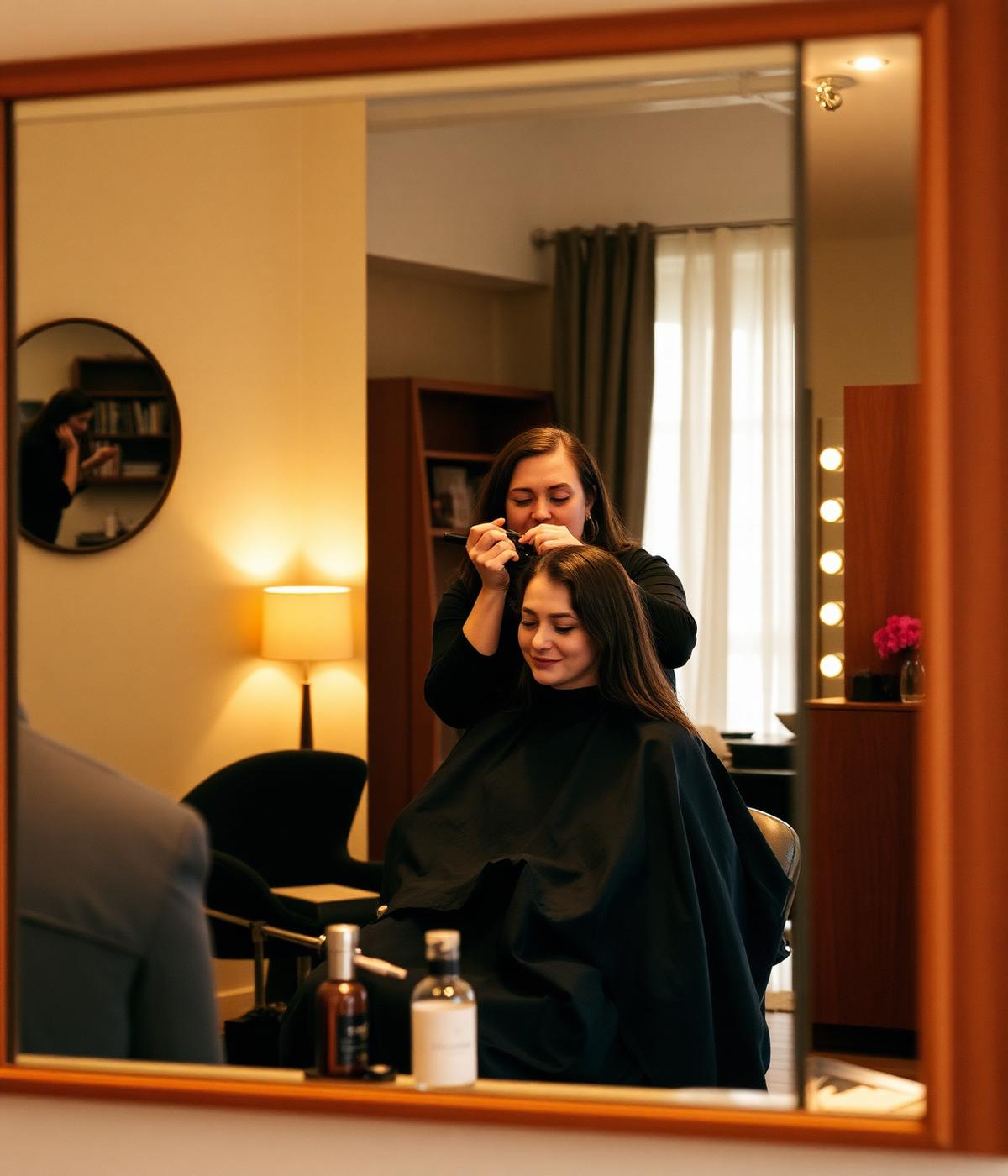
Belle
For over 26 years, Belle has perfected her craft from her boutique salon in Orland Park, Illinois, specializing in Japanese Hair Straightening, Keratin Smoothing, and restorative hair care.
Read Belle's Story →